Work Case study
Courselet
Internal product · One Eleven
A card-based micro-course builder that sits between a slide deck and an LMS. Creators build lesson and quiz cards; learners tap through a public link with no account.
- 5 days
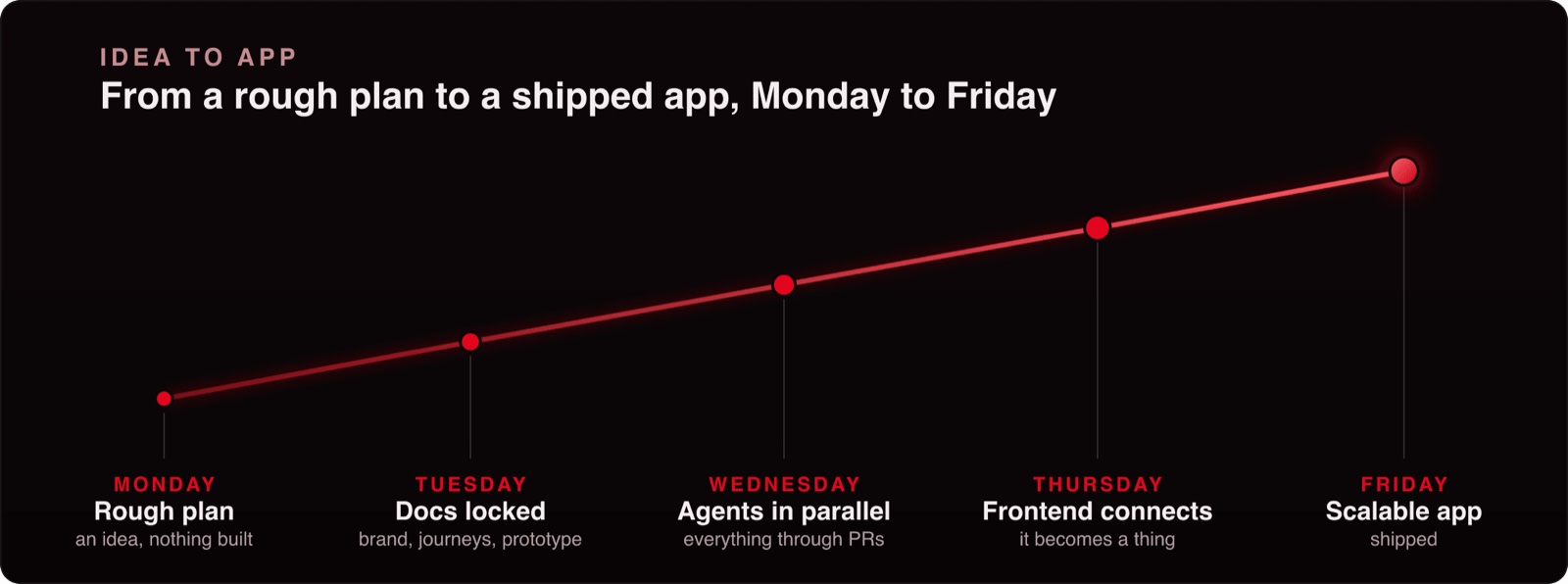
- From rough plan to shipped app
- 57
- Pull requests for the whole MVP
- ~94%
- Of commits
- 0
- Accounts or personal data asked of learners
The problem
One of our clients was paying for a third-party service to embed a micro-course inside an app we had built for them. A course builder of our own could replace it down the line: a real product with a real reason to exist, but no client waiting on it.
That made it the right first test for our AI development flow. A flow on paper is worth nothing until it survives a real project, and we did not want its first run to be on a client.
What I built
An LMS is heavy and a slide deck just sits there. Courselet is for what sits between: a coach’s method, an onboarding explainer, a short briefing, finished in one sitting on a phone.
-
Split-screen editor
Creators build lesson and quiz cards side by side with a preview that shows exactly what a learner will see.
-
Immutable publishing
Publishing freezes a snapshot of the course to a clean public link, so later edits never change what learners are halfway through.
-
No-account learners
Learners tap through, answer quizzes with instant feedback and hit a completion screen. No account, no app, no personal data collected.
-
Brand as tokens
The design is a token system down to the signature progress bar, where each pill is literally one card of the course.
My role
Lead developer, about 94% of commits, essentially the whole MVP. My day was not watching code stream past: I was managing agents, making sure none was sitting on a blocker, testing what they put out, and working on a separate project at the same time.
The flow started with documents (requirements, brand, journeys, page specs and a clickable prototype) drafted by AI, reviewed, then locked. Then the agents built in parallel, everything through pull requests.
Key decisions
-
Documents before code
If something was not written down, agents flagged the gap instead of guessing. Locking the docs early is what made parallel building safe.
-
Snapshots, not live courses
Publishing writes an immutable snapshot, which keeps the learner side simple, cacheable and safe from half-finished edits.
-
Collect nothing from learners
Anonymous by design. No sign-up means no friction for learners and no personal data to protect.
Outcome
- Shipped
- A working, scalable app, live at courselet.oneeleven.tech.
- Flow proven
- Two weeks later the same flow ran a real client project.
- One honest gap
- An internal run has no client UAT. The next run did.